Showing posts with label #Tanayia Whisper upon the Water. Show all posts

Monday, August 16, 2021

YA and Middle Grade Novels--Aren't Just for YA Readers Any Longer! By Connie Vines #BWLAuthor, #MFRWAuthor, #YANovels, #MiddleGradeNovels, #RandomThoughtsScatteredAbout

  •  
Weekly Feature #3


Hello, My Lovelies,

Who says young adult novels are just for kids? Reading YA offers adults a world they don’t often find in more grown-up novels. The settings can be more fantastical, and the emotions can feel downright nostalgic. Whatever your reason for diving in, here are some YA reads that can easily be appreciated by an older audience.

Did you know:

A 2012 survey by a market research firm found that 55 percent of these books are bought by people older than 18. (The definition of YA is increasingly fuzzy, but it generally refers to books written for 12- to 17-year-olds. Meanwhile, the cultural definition of “young adult” now stretches practically to age 30, which may have something to do with this whole phenomenon.)

The largest group of buyers in that survey—accounting for a whopping 28 percent of all YA sales—are between ages 30 and 44. 

Today’s YA, we are constantly reminded, is worldly and adult-worthy. 

 Most importantly, these books consistently indulge in the kind of endings that teenagers want to see. YA endings are uniformly satisfying, whether that satisfaction comes through weeping or cheering. 

These endings are emblematic of the fact that the emotional and moral ambiguity of adult fiction—of the real world—is nowhere in evidence in YA fiction. These endings are for readers who prefer things to be wrapped up neatly, our heroes married or dead or happily grasping hands, looking to the future. 

Great works of fiction for YA Readers include: 

  • To Kill a Mockingbird, by Harper Lee. 
  • Little Women, by Louisa May Alcott.
  • The Diary of Anne Frank, by Anne Frank.
  • Roll of Thunder, Hear My Cry, by Mildred D. Taylor.
  • Don't Ask Me Where I'm From, by Jennifer De Leon. 
  • Bloom, by Elizabeth Scott.
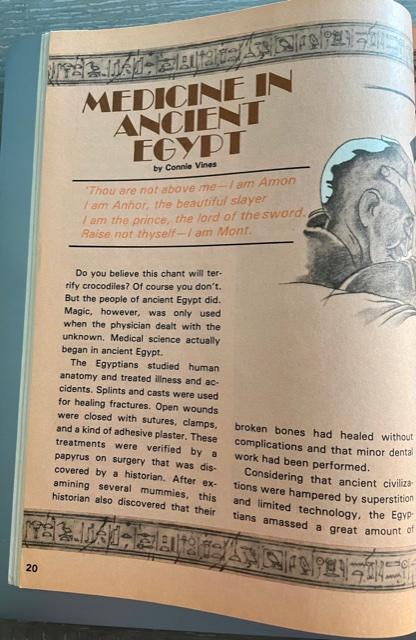
I began my writing career in YA fiction. I wrote on spec for Junior Detective Magazine, Humpty Dumpty Magazine, Brilliant Star, and AIM Magazine. Several of my non-fiction articles became part of the Benjamin Franklin Educational Series.


Artwork: Al Michini


My article received promo on the front cover of the magazine!  I was so excited!!


Artwork: Larry Simmons


During this time, and for the next fifteen years, I judged local and international writing contests, spoke at libraries and in middle school classrooms and assemblies.  

I always requested student topics in advance so I could discuss topics of interest with the current group.  Afterward, I held Q & A.


My favorite appearance was during the school district(s) yearly "Young Author Awards." I served on the board of the Pomona Valley Writers Association. Our members read every entry (K - 8th grade). We fundraised for our specially designed metals. Each school and every grade level in each school had categories: 1st, 2nd, and 3rd award winners. as you can see, it was a well-attended event.

One of the first guest speakers of the PVWA was famed poet, Carl Sandburg
(for more on the Pomona Valley Writers Association visit this link). 

We held the award ceremony at our famous high school auditorium  (once a college, attended by Beverly Cleary) and, when a high school, holds bragging rights to authors: Joseph Wambaugh  

Also, performer and Chaffey alumni,  Daniel Durston (Here is a clip from Peter Pan where he plays Captian Hook). https://www.youtube.com/watch?v=gQEBhUWJoOY
and in Las Vegas, on television.

Now back on topic 😄✍:


My current YA/MG Release (available in English and Spanish) print and ebook


National Book Award, Nominee
Independent E-Book Winner, Historical Fiction
Frankfurt ebook, Nominee
Kindle Unlimited #1 Best Seller in Native American Historical Fiction

Thank you for stopping by,
XOXO
Connie

Available at These Book Sellers  (Just click on link)

Monday, August 9, 2021

Barbara Drake, Tongya/Gabrielino, Tribal Elder-- Dedicated Teacher, Colleague, and Dear Friend By Connie Vines #BWLAuthor, #MFRWAuthor, #NativeAmerican, #RandomThoughtsScatteredAbout


Weekly Feature #2

Hello, My Lovelies,

Today I would like to honor a dear friend of mine.  

Barbara Drake was introduced to me when I was a member of the Parent Advisory Council, San Bernardino County, for Title IX and Title X Programs through the public schools' program. 

She, along with Tribal Elders: Maha-Tal-Meh (Jacques Condor), Linda Baguley, and Larry Sellers (Cloud Dancing/Dr. Quinn MedicineWoman) encouraged me to write my YA historical novel, Tanayia--Whisper upon the Water.


Barbara Drake was loved by all, never spoke ill of anyone, and always brought a positive light to her interactions with students, staff, and community members, always seeking to unite rather than divide.

Born in West Los Angeles in 1940 to Tongva mother Dolores Lola Lassos and Anglo father Charles Milton Scott, Barbara Drake (née Barbara Ann Scott) was raised exclusively on her mother’s traditional plant-based medicines until she was in her teens. 

Barbara was an enrolled member of The Gabrieleño/Tongva San Gabriel Band of Mission Indians and served as Tribal Secretary for many years. She worked in Indian Education Title VII for San Bernardino Schools, before coming to Pitzer College in 1993 to lecture on ethnoecology.  Her Tongva name was Kwi Tokor, meaning Acorn Woman.

I was honored to call Barbara my friend.  

Her knowledge of Native American healing plants and culture is shared with her interviews on PBS, (Public Broadcast System) Television interviews.

Please visit these links:  

https://www.kcet.org/shows/tending-the-wild/episodes/gathering-medicine

Native plants educator Barbara Drake talks about what has been lost by separating native people from their land. For years as the founder of Chia Cafe Collective, she has worked to restore, research, and promote the use of indigenous plants in California and elsewhere. 

Co-produced by KCETLink Media Group and the Autry Museum, this six-part multimedia series and one-hour documentary special are presented in association with California Continued, a groundbreaking exhibition now on view at the Autry.

Also:

Barbara's yearly arts program:

https://idyllwildarts.org/barbara-drake-tongva-walks-on/


This is only a small sampling of the vast knowledge of medicinal plants used by the Tongva.

http://runajambi.org/tongva/introduction.htm


Walking together in spirit as we walked together through life.
Barbara Drake 
February 2, 1940 - November 18, 2020


Connie

Saturday, March 20, 2021

How to Develop Tension in Your Writing by Connie Vines #RR #RR82 #WritingTips

How do you develop tension in your writing?

RR#82

Thank you Robin for this month's topic :)

I believe creating tension in a novel (or short-story) is a skill which is always been honed and re-invented by an author.

The genre of fiction or even non-fiction often denotes the type of tension you develop when you are writing.  However, these are the go-to questions I ask myself when I am writing and revising my stories: 

First and foremost, your characters must be people your readers will like and relate to.

Have I created  a conflict crucial to your characters. ...

Are my characters engaging characters with opposing goals. ...

Remember to keep raising the stakes. ...

Allow tension to ebb and flow. ...

Keep making the reader ask questions. ...

Create internal and external conflict. ...

Create secondary sources of tension. ...

Make the story unfold in a shorter space of time.


Also:

Master the art of pacing. ...

Time your tension effectively. ...

Introduce exponential tension. ...

Consider using cliffhangers: at the end of a scene or at the end of a chapter.

Throw out those extra words (adverbs). Verbs = Action.


Examples in my writing:

Excerpt from "Brede" Rodeo Romance, Book 2

With and unexpected flash of recall cam a feeling of success. Only the joy was gone al too quickly, blotted out by something else that hovered at the edge of her consciousness. Dark and menacing, it pressed down on her like a thunderhead in the moments before a cloudburst.

She remembered the darkness...

Excerpt from "Lynx" Rodeo Romance, Book 1

Coming out of chute number 5 is Lynx Maddox, the "Wild Cat"...atop Widow-Maker. This cowboy hails from Amarillo, Texas. Let's give him a big Montana welcome."

Everything seemed to move in slow motion. The heavy thud of hooves to the ground. The animal's labored breathing and the clang of the cowbell filled Lynx's head as his butt was pounded against the bull's back. His spine compressed with every jolt.

Helluva way to make a living, he thought, fighting to remain upright. Infuriated, the bull jerked its head from side to side, rolled his eyes, and suddenly aimed a horn at Lynx's leg.

The Brahman had changed his tactics, Lynx realized, his arm pulling hard at the socket as he fought against gravity. Exhaling a heavy snort, the animal dropped its head forward and blasted toward the center of the arena, Lynx knew he was in trouble, big time. . .

Excerpt from "Tanayia--Whisper upon the Water" Native American/First Peoples Series, Book 1

1868

The Governor of New Mexico decreed that all Indian children over the age of six be educated in the ways of the white man.

Indian Commissioner, Thomas Morgan, said: It was cheaper to educate the Indians than to kill them.

1880, Apacheria, Season of Ripened Berries

Isolated bands of colored clay on white lime-stone remained where the sagebrush was stripped from Mother Earth by sudden storms and surface waters. Desolate. Bleak. A land of barren rocks and twisted paths that reached out into the silence.

A world of hunger and hardship. This is my world. I am Tanayia. I was born thirteen winters ago. My people and I call ourselves "Nde" this means "The People". The white man calls us Apache....

I hope you enjoyed this month's topic.

Remember to complete the blog hop and see what my cohorts have divulged (we all love  secrets) about developing tension in their writing.

Happy Reading and Writing,

Connie

Marci Baun http://www.marcibaun.com/blog/

Dr. Bob Rich https://wp.me/p3Xihq-2fU

Skye Taylor http://www.skye-writer.com/blogging_by_the_sea

Victoria Chatham http://www.victoriachatham.com

Connie Vines http://mizging.blogspot.com/ (You are here now)

Diane Bator http://dbator.blogspot.ca/

Rhobin L Courtright http://www.rhobincourtright.com


Saturday, July 21, 2018

How Do You Handle Violence/ Danger in a Story? By Connie Vines #RR #07/21/18


How do you handle/use violence, or any type of danger, in your stories?

Rhobin thank you, once again, for this month’s Round Robin topic.


The definition of Violence (dictionary.com)
  • ·         swift and intense force:
  • ·         the violence of a storm.
  • ·         rough or injurious physical force, action, or treatment: to die by violence.
  • ·         an unjust or unwarranted exertion of force or power, as against rights or laws: to take over a government by violence.

The definition of Danger (dictionary.com)
  • ·         liability or exposure to harm or injury; risk; peril.
  • ·         an instance or cause of peril; menace.
  • ·         Obsolete. power; jurisdiction; domain.

Since I view reading in a way to relax, to solve a mystery, or learn what motivates people/humanity/etc., I am always selective in how, to what degree, I insert danger/or any degree of violence into my stories.

I am more inclined to have suspenseful elements in a story.  However, in a historical novel, including YA, there is a certain amount of violence which was part of life during any given time period.  I do not go into graphic detail but I can’t erase or change historical facts.  In my current release, Tanayia—Whisper upon the Water, set in 1880s Indian Territory, my heroine’s band is murdered and she in the only survivor (historical fact).  She is taken hostage and escapes (historical fact) only to be taken to a Native American Boarding School.  

My heroine is resourceful and a survivor.  My readers travel with her.  They clear for her; cry for her; and learn from her.  In the epilogue, Tanayia receives her hard-won happy-ending.

I strive to given my hero and heroines an upbeat ending, or at the very least, hope for a brighter future.

Please stop by and see what the other member of this month’s members of Round Robin have to say:
Connie

Dr. Bob Rich https://wp.me/p3Xihq-1i2


Friday, January 19, 2018

What is Your Preferred Way of Exposing Your Characters? By Connie Vines

Topic: Point of View

Since I write in multiple genres, my point of view seems to remain the same within a specific genre.
My YA/Teen/Tween stories and novels are told in the first person.

 For me this is the most personal for the reader--meaning a reader is intimately involved in the story and steps into the main character’s mind.  The reader experiences emotions intensely, because he/she becomes the character.  And since few YA/Teens/Tweens are familiar with a ‘none-tech’ world, this is the best way to expose them to history/a new setting, etc.

 The single POV helps the story unfold in a way to allow the reader to understands life from an 1890 character.  No reaching for a cell phone, or grabbing a pizza for dinner!

When I write in first person, I do not change point of view of view.  I rely on dialogue or the main character’s observations to keep the reader aware of changes in plot etc.

The opening from my current release, Tanayia: Whisper upon the Water, Native American Series, Book 1

1880, Apacheria, Season of Ripened Berries

Isolated bands of colored clay on white limestone remained where the sagebrush was stripped from Mother Earth by sudden storms and surface waters. Desolate. Bleak.  A land made of barren rocks and twisted paths that reached out into silence.

A world of hunger and hardship.  This is my world.  I am Tanayia.  I was born thirteen years ago.  My people and call ourselves “Nde” this means “The People”. The white man calls us Apache. 

Second person point of view is far more challenging for me. I find if an author uses second person in literature, he/she does so to engage the audience more and to make them part of the story and action or possibly make a thematic point about the characters. Second person is much more common in nonfiction, especially self-help books and business writing.

Examples

"You have brains in your head. You have feet in your shoes. You can steer yourself any direction you choose. You’re on your own. And you know what you know. And YOU are the guy who’ll decide where to go." (Dr. Seuss, Oh, the Places You’ll Go! Random House, 1990).
Think back to when you were a kid and read Choose Your Own Adventure books. Weren’t those fun? You got to be the main character and decide where the story went. Well, those were all in 2nd person.

Third person point of view. Third person is most often used in novels. Many readers prefer third person because it is so popular. It can work from the omniscient viewpoint of the author telling the story even to informing the reader what the character or different characters are thinking.

I write my Contemporary/ Romantic Suspense/ Paranormal in third person in a character’s limited viewpoint. Here a character tells their story through their own viewpoint and senses. It tells what they say, see, hear, feel or taste, and even what they think. Different characters’ viewpoints can be used, but a clear demarcation is used to show when the narrative switches from one character to another. I like this method because it remains very intimate to the reader, but allows easy change between characters, too, unlike first or second voice.

Opening scene: Lynx, Rodeo Romance, Book 1

Charlene hadn’t told Rachel that she’d fixed her up with a cowboy, much less Lynx Maddox, the “Wild Cat” of the rodeo circuit.  Rachel signed.  She should have known.  After all, Charlene only dated men who wore booth and Stetsons.

Rachel Scott cringed at the very thought even as her gaze took in the breadth of Lynx Maddox’s chest, his broad shoulders, and dark green eyes that scanned her with blatant masculine approval.

A snippet from: Brede, Rodeo Romance, Book 2


Brede couldn’t seem to stop watching and worrying about Kate.  Even though she was trying to hide behind the menu, he sensed her tension.  He had to grip the edge of the table to keep from taking the menu out of her hands and looking into those wide green eyes again, just to catch a glimpse of whatever it was he saw when she looked at him.  But he wasn’t going to do anything rash.  Not now, not ever.  He wasn’t going to take her back to the ranch—not even if Caldwell retired and it meant eating peanut butter sandwiches from here to eternity.

He might gnaw his tongue off trying to keep silent, but he wasn’t going to ask her to stay.

For a change of pace: Here Today, Zombie Tomorrow, A Sassy & Fun Fantasy


Since her sister was contemplating the contents of a tin filled with Danish cookies, Meredith found herself cataloging the events that led up to her ‘accident’.

A charter member of the SoCal Arts Association, she’d been participating in the annual Zombie Walk Festival in Long Beach when it ‘happened’. . .

I hope you enjoyed my post and the snippets from my stories.

amazon.comamazon.com    barnes and noble          BWL Publishing

Please visit stop by and see what all of our Round Rhobin participants have to say on this month’s topic!

Happy Reading,

Connie

Dr. Bob Rich https://wp.me/p3Xihq-1ag
Helena Fairfax http://www.helenafairfax.com/blog
Fiona McGier http://www.fionamcgier.com/
Judith Copek http://lynx-sis.blogspot.com/
Marci Baun  http://www.marcibaun.com/blog/
Anne de Gruchy https://annedegruchy.co.uk/category/blog/
A.J. Maguire  http://ajmaguire.wordpress.com/
Skye Taylor http://www.skye-writer.com/blogging_by_the_sea
Anne Stenhouse  http://annestenhousenovelist.wordpress.com/ 
Beverley Bateman http://beverleybateman.blogspot.ca/
Rhobin L Courtright http://www.rhobinleecourtright.com
Diane Bator http://dbator.blogspot.ca/

Romance Reviews

The Romance Reviews