Showing posts with label Gypsy Spirit. Show all posts

Tuesday, March 4, 2014

Rita's Amazon Countdown Deals #amazondeals

Several of Rita's books are undergoing price reductions in the Amazon Countdown deals.  At the moment, the poor dear is trying to recover from a retinal tear and a very painful wrist surgery that is causing her to endure more agony through physical therapy and a brace that pulls on the healing ligaments.  So...make a note because I know you'll want to partake of these special discounts on her books:


Rita's Amazon author's page


Leota Dream Woman on Amazon.com
Scheduled 3/1 through 3/7/2014


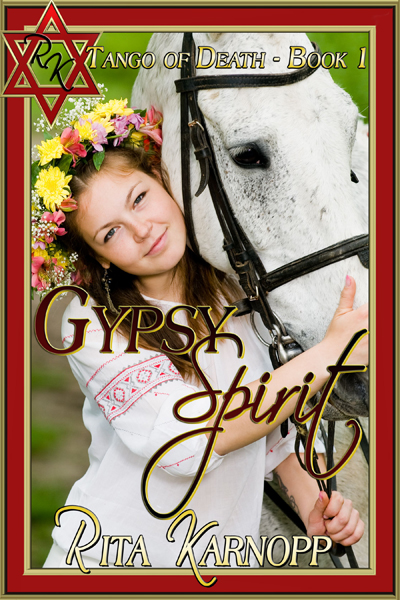
Tango of Death-Gypsy Spirit on Amazon.com
 Scheduled 3/4 through 3/10/2014


No Ordinary Killer on Amazon.com
Scheduled 3/8 through 3/14/2014


Ransom Love on Amazon.com
Scheduled 3/9 through 3/15/2014


Kindle Countdown Deal on Amazon.co.uk
Scheduled 3/9 through 3/15/2014

Somehow, I missed the February special for Kidnapped...but even at $2.99 it's an awesome read.


Tuesday, October 1, 2013

MUSIC WHILE WRITING BY RITA KARNOPP

I love music and I can set my mood by it.  Like many others, sometimes I like classical or sometimes I like Country or Native American.  You see it all depends on what I’m writing.

If I had to choose just one sound-track to listen to – one that would fit any genre I’m writing – I’d choose Last of the Mohicans.  Yep, that music pushes me on with intensity and excitement. 

When I write 1800s Native American novels . . . you guessed it, I’m listening to Mary Youngblood, Douglas Spotted Eagle, R. Carlos Nakai and Robert Mirabal.  The flutes haunt me and the drums bring me back to a time on the desert where a people lived in harmony on the plains, in teepees, and shared a way of life the white man (Napi-kwan) could have learned much from.

When writing suspense, that involves my Montana cowboys and Blackfeet Native Americans, I lean toward modern country and of course more wonderful drums, flutes, and Native dance songs.

I’ve used reference to music in many of my stories.  My thriller, Atonement, included various sixties music and my Indian Historical, Whispering Sun has a man humming Amazing Grace.

No matter the book, you can infuse music to add a bit more texture to your story.  Lyrics will inspire you to write yet another level into the tone and flow of your story.


But I’ll be honest, everyone once in a while – I just want it silent.  When I wrote the Tango of Death series, I played gypsy music most of the time.  But during those hard to write scenes – no music could soothe my soul to describe what I had to write.  You’ll know when it’s right or wrong.

Tuesday, May 21, 2013

WRITING a Book Series By Rita Karnopp

Have you considered writing a book series but the mere idea made you run in the other direction?  Book series are very popular – and there are good reasons.  The reader becomes invested in the characters and they don’t want the story to end.  Or, we are truly interested in finding out what happened to our characters years later.

When I came up with an idea to write about the Gypsies during WWII, I decided to name it Tango of Death (Tango de Fung).  When I proposed the book to my publisher, she asked if I could do a trilogy.  What?  Three books?  Uh, you always say ‘yes’ when asked such a question by your publisher.  But now the plot I’d been tossing around in my mind for over ten years had to change.  Could I write a trilogy?  It sounded like a daunting task.

I created a story involving gypsies, partisans and Jews.  Hmmm . . . how would I connect them? It didn’t take me long to consider writing about three sisters and creating a separate story for each.  I came up with Gypsy Spirit, Partisan Heart, and Jewish Soul.  I loved the titles and the concept.  Since I’m visual I was thrilled my published gave me my covers – what an inspiration they were.

I approached the series like any other book; a combination of characters, settings and plots.


There were certain absolutes.  All three books would take place in Poland and Germany during 1943 and involve the holocaust.  I didn’t want it to be the ‘same-old’ . . . so I painstakingly researched for those bits of information that were new.  I watched documentaries and read exhaustively.  The dress, vehicles, music, food, and even slang had to be 1940s.

I knew I wanted to ‘sparingly’ use Polish, German, Roma, Yiddish, and of course English as the main language.  It would be tricky to give the flavor of all these languages and still make sure the reader knew what was being said.

A sense of place was vital and I wanted nothing to do with sensationalizing, I wanted everything to sound, smell, feel, taste, and look 1940s Poland and Germany.  City names and layout had to be authentic as did rivers and bridges.

Even more serious, I used infamous Nazi officers and partisans and had to be careful not to place them in my story where they couldn’t have been during the timeframe. They couldn’t have ten children in my book if they didn’t have ten children in history.  I wanted to kill one of the Nazi officers, then remembered he didn’t die for five more years. 

I had to account for the terrain and how long it would take to reach certain destinations.  Vehicles and roads were different than they are now, and horseback or wagon timeframes had to be taken into account.

In book #1, Gypsy Spirit, I set the scene and introduced the sisters.  I developed a way for them to be separated . . . and an agreed meeting place for after the war (if they survived). Then Zilka took the story away . . .

In book #2, Partisan Heart, I had to create a way for the sister who ran off with her love to join the partisans, struggle with her conscious, go back to her kumpania, only to find all her people dead.  Vanya became tightly involved with the partisans and the Nazi infiltration of the Polish underground.

By book #3, Jewish Soul, the reader can only hope the third sister, Mayla, has fared better, safe with their mother and grandmother in Switzerland, or is she.  Will they ever be to together again?  Book three must tie all the loose-ends and develop an ending that will satisfy the reader – and even keep them thinking about all three girls long after they close the cover.

Hints for a series:  Keep a separate three-by-five notebook for each book.  Jot down all information you want to address in each book.  Some information comes to you during book one, two or even planning in book three.  You might have to foreshadow in your earlier books . . . that is why planning . . . at least the skeleton of all three stories should happen before starting page one of book one.

Keep an ‘electronic’ file called ‘notes’ for each separate book.  I never take time to hand-write notes if I can copy and paste them into an electronic file.  I might jot a written reminder in my notebook to cross-reference my electronic notes, but I keep it all until the final words are written.

I work on my hard-drive.  Save your work several times a day.  But, at the end of the day – I always save the same work out to a flash drive.  If you’ve ever lost a day’s work … or more (which I have) . . .  you’ll never let it happen to you again!

It’s strange – but nothing has been more satisfying as writing my trilogy, Tango of Death.  If you read book #1, Gypsy Spirit, and were upset when they closed the door to the gas chamber – don’t give up hope – if you’ve read Gypsy Spirit and Partisan Heart – and are upset when those heavy doors start closing – dong’ give up faith  . . . book three, Jewish Soul, has more twists and turns . . . and creates incredible tense situations, and - - - if you’ve hung in there . . . ‘satisfaction’ for the reader . . . and my Gypsy girls.

Tuesday, April 23, 2013

WRITING A BOOK SERIES By Rita Karnopp


 Have you considered writing a book series but the mere idea made you run in the other direction?  Book series are very popular – and there are good reasons.  The reader becomes invested in the characters and they don’t want the story to end.  Or, we are truly interested in finding out what happened to our characters years later.
When I came up with an idea to write about the Gypsies during WWII, I decided to name it Tango of Death (TANGO FUN TOYT).  When I proposed the book to my publisher, she asked if I could do a trilogy.  What?  Three books?  Uh, you always say ‘yes’ when asked such a question.  But now the plot I’d been tossing around in my mind for over ten years had to change.  Could I write a trilogy?  It sounded like a daunting task.
I created a story involving gypsies, partisans and Jews.  Hmmm . . . how would I connect them? It didn’t take me long to consider writing about three sisters and creating a separate story for each.  I came up with Gypsy Spirit, Partisan Heart, and Jewish Soul.  I loved the titles and the concept.  Since I’m visual I was thrilled my published gave me my covers – what an inspiration they were.
I approached the series like any other book; a combination of characters, settings and plots.
There were certain absolutes.  All three books would take place in Poland and Germany during 1943 and involve the holocaust.  I didn’t want it to be the ‘same-old’ . . . so I painstakingly researched for those bits of information that were new.  I watched documentaries and read exhaustively.  The dress, vehicles, music, food, and even slang had to be 1940s.
I knew I wanted to ‘sparingly’ use Polish, German, Roma, Yiddish, and of course English as the main language.  It would be tricky to give the flavor of all these languages and still make sure the reader knew what was being said.
A sense of place was vital and I wanted nothing to do with sensationalizing, I wanted everything to sound, smell, feel, taste, and look 1940s Poland and Germany.  City names and layout had to be authentic as did rivers and bridges.
Even more serious, I used infamous Nazi officers and partisans and had to be careful not to place them in my story where they couldn’t have been during the timeframe. They couldn’t have ten children in my book if they didn’t have ten children in history.  I wanted to kill one of the Nazi officers, then remembered he didn’t die for five more years. 
I had to account for the terrain and how long it would take to reach certain destinations.  Vehicles and roads were different than they are now, and horseback or wagon timeframes had to be taken into account.
In book #1, Gypsy Spirit, I set the scene and introduced the sisters.  I developed a way for them to be separated . . . and an agreed meeting place for after the war (if they survived). Then Zilka took the story away . . .
In book #2, Partisan Heart, I had to create a way for the sister who ran off with her love to join the partisans, struggle with her conscious, go back to her kumpania, only to find all her people dead.  Vanya became tightly involved with the partisans and the Nazi infiltration of the Polish underground.
By book #3, Jewish Soul, the reader can only hope the third sister, Mayla, has fared better, safe with their mother and grandmother in Switzerland, or is she.  Will they ever be to together again?  Book three must tie all the loose-ends and develop an ending that will satisfy the reader – and even keep them thinking about all three girls long after they close the cover.
Hints for a series:  Keep a separate three-by-five notebook for each book.  Jot down all information you want to address in each book.  Some information comes to you during book one, two or even planning in book three.  You might have to foreshadow in your earlier books . . . that is why planning . . . at least the skeleton of all three stories should happen before starting page one of book one.
Keep an ‘electronic’ file called ‘notes’ for each separate book.  I never take time to hand-write notes if I can copy and paste them into an electronic file.  I might jot a written reminder in my notebook to cross-reference my electronic notes, but I keep it all until the final words are written.
I work on my hard-drive.  Save your work several times a day.  But, at the end of the day – I always save the same work out to a flash drive.  If you’ve ever lost a day’s work … or more (which I have) . . .  you’ll never let it happen to you again!

Thursday, January 24, 2013

Power your writing project – by Rita Karnopp


     There are so many things we can do to power our writing projects.  What do I mean by that . . . well it’s a method I use to charge my senses in the genre’ I’m writing.
     Take for instance when writing an Indian historical I make sure I listen to Native flutes and Native music.  I watch movies that take place in the 1800s.  I read books that are Native in nature; both fiction and non-fiction.  I even burn sage or other scents of the time period.  If I’m writing about being out on the trail, I’ve been known to munch on jerky!
      So why do I create such an atmosphere while I’m writing?  It’s a mood . . . an ambiance that makes me think, feel, hear, see, smell, and even taste the time I’m writing about.  You’ve often heard that when you write you should be aware of the five sense (smell, taste, hear, feel, and see).  I actually believe there are seven senses – think is that 7th one.
      If you surround yourself with the feeling for the time-frame you’re writing, you’re most like going to remember those seven senses – and believe me when I get a whiff of sage or the sound of the flue permeates my thoughts, it forces me . . . no it reminds me to include them into my book.
     Now I’m working on my Holocaust Tango of Death trilogy.  For months I’ve read nothing but documentaries about the Holocaust.  I’ve watched nothing but movies on the Holocaust. I’ve studied the dress-code and mannerisms as well as the language used during the 1940s. It is so easy to slip and write with modern slang.  If I’m studying the 1940s I know I have a better chance of writing the 1940s.  If nothing else, it reminds me to stay true to the genre and timeframe I’m writing.
     In Partisan Heart, Book two of my Tango of Death trilogy, I wrote; “You are nothing short of Cinderella,” he said.  She glanced at him and smiled. “I’m surprised you even know that American fable.”
     That night when I went to bed it hit me like a blast of cold air; was Cinderella an American fable and was it even written in the 1940s?  Good thing I asked myself that question.  What I found out is; "Cinderella", or "The Little Glass Slipper", (French: Cendrillon, ou La petite Pantoufle de Verre, Italian: Cenerentola, German: Aschenputtel) is a folk tale embodying a myth-element of unjust oppression/triumphant reward. Thousands of variants are known throughout the world. The title character is a young woman living in unfortunate circumstances that are suddenly changed to remarkable fortune. The story was first published by Charles Perrault in Histoires ou contes du temps passé in 1697.
     Readers are savvy these days.  We not only need to be cognizant of the genre’ and timeframe we’re writing, but be careful of the information you use or refer to.  All it takes is one slip-up like the Cinderella comment and the reader will stop believing you as a writer and toss the book down.  You certainly don’t want that to happen.
     Stay in your element . . . and surround yourself as much as you can to aid in that endeavor.  One last trick I will share with you.  I create a book board.  In the Holocaust trilogy, I have my six feet by four feet cork board that is covered in pictures of Gypsies, maps of 1943, swastika, picture of Hitler, Gypsy wagons, concentration camps, etc.  At the top are pictures of the three book covers; Gypsy Spirit, Partisan Heart, and Jewish Soul.  They keep me grounded and inspired. 

Thursday, October 25, 2012

Ginger Asks...Ever Written A Difficult Review?

I'm not just an author, I've an avid reader, and although issues with my vision have slowed me down in both departments, when I find an author I love and discover that reading that person's work helps me to enhance my own novels, I can't pass up that opportunity.  Besides, I love to be entertained and this particular author has never disappointed me..

Don't be surprised that Rita Karnopp is that person, and one of the main reasons I asked her to join me on this blog.  She knows the importance of historical research, and even though we are fictional authors, one thing we both know is that facts pertinent to the era and people about which we write is vastly important and frequently scrutinized by historical buffs.  Besides, Rita is filled with wonderful ideas both for her novels and her blogs.  If I wasn't already a senior citizen, I'd want to be her when I grow up, but that doesn't mean I can't still admire her talent and aspire to reach the heights I feel she has.

Click to Visit Site
Recently, she had a new release and needed some peer reviews.  Believe it or not, we can be honest and forthcoming in what we write, and I have to admit I had some reservations about reading and reviewing a story written about an era and topic I've tried to avoid.  Gypsy Spirit is the first book in a new series from Books We Love Publishing, and in this case the topic is the holocaust.  My father, deceased now, was brought up Jewish and I suppose immigrated with his family to avoid the horrors and atrocities so aptly described in the novel.  I hated imagining the relatives I never met traveling in crowded railroad cards to unknown destinations only to be killed in the Nazi gas chambers of the prison and death camps.

I hated the realism shown through the persecution of a young Gypsy girl and her family, learning through a well-researched novel, that the Jewish people were far from the only ones who suffered at the hands of Hitler What I abhor the most if we still have these types of  people, but we call them bullies, politicians or terrorists.  Will history repeat itself?  I certainly hope not, but it's true there are those out there who hate us for our differences. This book is an eye-opener.

While I hated the subject matter of Gypsy Spirit, I have to salute my favorite author for taking on such a difficult topic and putting history into perspective through her story, research, and ability to create characters who grab your heart and work their way into your soul.  Kudos again to Rita Karnopp for delivering another winner.

Thursday, September 6, 2012

SIX WAYS TO OUTSMART PROCRASTINATION


I must admit ... I been busier than a beaver getting ready for winter!  I'm very excited to share I JUST FINISHED WRITING GYPSY SPIRIT!  I'm so excited how the story unfolded and ended . . . I will wait one more week - read it through and made changes, then send it off to my reader . . . before sending it on to my great publisher, Books We Love!  I'm so in love with my cover ... this is book one of the Tango of Death Series; book two is Partisan Heart, (which I'll start in October - I can hardly wait... I'm so excited.) and book three is Jewish Soul. 

Okay ... okay .... I'll move on.  My apologies for not blogging Monday and Tuesday ... I was finishing GYPSY SPIRIT ... smile!! Okay ... okay.... 

     I follow Jason M. Gracia's (Author, Shifting the Balance) Founder, www.Motivation123.com  - as I've mentioned a time or two.  Below is his article I felt necessary to share.  :)  Hope you like it as much as I do.
     The Spanish have a proverb: Tomorrow is often the busiest day of the week. Clever wordsmiths, those Spaniards. 
     We all procrastinate. We dawdle and delay, dally and defer. My office floor is still home to a pile of papers that needed filing two months ago; I'm waiting for them to stop dallying and file themselves.
     Whatever the task, whatever the excuse, the tips below will help you do today what most people put off to next month.
     1. Ask yourself, What's the holdup? People procrastinate for many reasons. Some fear failure. Some avoid boring jobs. Others shy away from getting tangled in a complicated mess (i.e., my pile of papers). Knowing the cause of the problem may open your eyes to an obvious solution.
     2. Do you need to do it? Simple question, but it's a good one. Sometimes we put something off because it's not important. If you don't really need to do it, free yourself of the mental burden and drop the task from your to-do list.
     3. Ask for help. I have an ancient window mechanism that takes the effort of a drawbridge operator to open. Last month, unsurprisingly, it broke. Someone had to fix it, but I was hoping that someone wasn't me. So I put it off.
     After weeks of gazing at the window without actually doing anything, I asked a friend to help. It wasn't only because I have the mechanical skills of an uncoordinated squid; I knew it would get me moving.
     4. Commit just five minutes. That's it--just 300 seconds. Telling yourself you only have to do something for a sliver of time does two things. It transforms a big job into a tiny matter: Five minutes? I can do that. And because getting started is the hardest part, once your five minutes is up you'll often drive right
on through to the finish.
     5. Focus on the end. Thinking about how you'll feel when you've done whatever needs to be done may motivate you to make it happen.
     I don't much like to organize, but I love to be organized. This is what I focus on--the feeling of having everything in its place, clean and tidy--when I need to declutter a space. Although my pile of papers proves that I have some work to do.
     6. Just do it. Quit stalling. Quit rationalizing. Stand up, walk to the danger zone, and get to work.


Romance Reviews

The Romance Reviews