"Do you plot out your books before you start writing, or do your characters drive the plot?"
If this question had been presented to me ten years ago, I would have stated emphatically that I was a "Plotter".
Now? I consider myself more of a "Panster".
What changed?
When I began writing full-length novels, I wrote historical fiction and fiction that required a great deal of research. My topics were contemporary issues: childhood abandonment, death of a sibling, and the everyday challenges of daily survival (historical fiction).
So, of course, I acquired stacks of notes, fashioned time lines, and character studies. My facts need to be sprinkled in the story. Professions were also key to the storyline.
Even though my story was "fiction", it had to ring true to the reader.
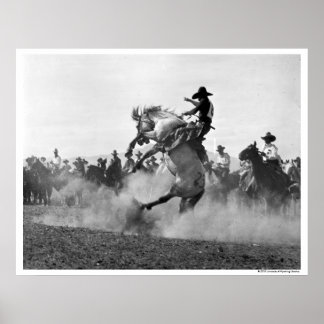
Bull riding and the sport of rodeo were researched, and events were attended. I vacationed in Montana and lived there for a time in Texas. My father was a bronc rider during high school.
Though I rode horses and was familiar with the aspects of their care, I was never personally involved with the sport of rodeo.
I was also a stickler for regional food and the sensory aspects of the time period/locations.
You will find recipes for "Not for SissiesTexas Chili" (and others) in "Lynx" Rodeo Romance Book 1. I also shared Native American recipes, past and contemporary versions, in my YA historical novel.
While "Brede" Rodeo Romance Book 2 is a Romantic Suspense. (My heroine doesn't cook).
My writing has changed/evolved, as has the reader market.
I find I've become more of a "Panster" in my writing process.
My Paranormal stories are "tongue-in-cheek". Here Today, Zombie Tomorrow". These stories are also novellas (2 still in progress).
My current stories are character-driven with heavy doses of humor.
Therefore, my novels have unexpected twists and turns (at least unexpected to me).
I still have a detailed plot, but I allow my characters to take control of the storyline.
Of course, this often (always) causes a disruption in my writing process, has me brewing a cup of coffee while trying to sort things through.
Often, I laugh out loud over the dialogue I hear! Or when a "character' refuses to go through with MY plan.
Oh, before I forget! I have an audio release!
"Lynx" Rodeo Romance Book 1 (Free! when joining Audible)
With a dangerous reputation for taking chances and tempting fate, rugged cowboy Lynx Maddox had one goal in life—to win the coveted Silver Buckle rodeo championship. But when he sets eyes on lovely Rachel Scott, he becomes determined to capture her as well.
Rachel traveled the circuit with her famous rodeo rider dad until his fatal accident in the arena.
Now, she wants nothing to do with that world—or the men who risk their lives for one brief moment of glory.
But her attraction to Lynx becomes too powerful to deny. . . and his unexpected gentleness too seductive to resist. . .
Since many of my romance and historical novels have Western settings, And my hero and heroine, of course, are both single. I pondered the dating dilemma of modern day cowboys and cowgirls; ranchers and the like.
During a vacation in South Dakota I realized it was often 60 miles from a ranch to any hope of a place I would even title a 'mini' city.
That has to make for a pretty shallow dating pool. Yes there is church, social events, and community members. But that has an 'arranged marriage' feel to it. I am looking for danger, mystery, and the great unknown for my contemporary romance. I'm thinking it's something I won't find in a small ranch town. Because let's face it, small towns are big on letting 'bad-boys' hang around and marry the 'women folk'.
I'd didn't want the expected. . .a former black sheep returns home. . .she runs off with the town's bad boy.
Where you are sitting with a cup of coffee, staring into the great unknown, you realize that there is always a television commercial ad for some service. Is particular evening, sandwiched between an Atkins and Marie Osmond NutriSystem commercial, was a Match.com, E-Harmony commercial.
There are numerous other online sites. Some sites are specialized, some are not- over 50, Christian, with kids, etc. Is there a site for cowboys and cowgirls, I wondered?
After a few minutes of Internet surfing I discovered there is indeed a site for cowboys and cowgirls. A surprising number of dating sites, in fact.
Here are the website blurbs (mind you this is not an endorsement on my part--only for research purposes.):
Thousands of singles join Western Match every day looking for dates, friendships, long lasting relationships, or marriage. If you are looking to date a cowboy or cowgirl, meet country singles, farmers, or ranchers, this is the dating site for you. Sign up today and see why Western Match is the best cowboy dating site on the net and the real deal since 2002.
This site brags that it's mobile friendly.
Welcome to Cowboy Cowgirl Come build relationships with people who share your appreciation for the country way of life, so create a profile and start exploring. Online dating has never been easier! Connecting cowboys and cowgirls since 1999.
The one I found the catchiest was: What are you Waiting for? Date a Cowboy.
Yep, that one hooked me--ah, I mean my heroine.
Believe it or not there is even a dating site for Rodeo Cowboys! Where Rodeo Meets Romance.
Unfortunately, there isn't a site to match cowboys with city girls. . . but I won't letting a little thing like that stop me!
We have all watched many a western movie featuring Mail-Order Brides. I also recall a musical
(Seven Brides for Seven Brothers) on stage before becoming a 1950's movie also.
So how historically accurate were these movies and (Here Come The Brides) television shows?
What was I able to uncover during my research?
The term "mail-order bride," as it applies to a marriage arranged via correspondence between American men and women in the Great Plains in the nineteenth century, is largely a misnomer. Twentieth-century folklore has it that a homesteader could peruse the Sears and Roebuck or Montgomery Ward catalogs and order a wife to be delivered to his dusty doorstep just as easily as he could order a rifle, stove, or stomach cure, but the truth is far more interesting.
Arranged long-distance marriage existed in the Plains in a range of communities, took a number of forms, and grew out of a variety of social, economic, and cultural phenomena, but never involved the literal sale, purchase, or ownership of women, as the term "mail-order bride" suggests. (Thank goodness!)
Among Plains Indians, sight-unseen marriage was frequently arranged with the help of a middleman and could involve the payment of a "bride price," intended to compensate the woman's family for the impending loss of her labor. But intercultural marriage was rare. In 1854, at a peace conference at Fort Laramie, a prominent Cheyenne chief requested of the U.S. Army the gift of 100 white women as brides, but the army refused. Russian immigrants brought with them the tradition of koopla, whereby marriage brokers were paid a fee to pair men with potential spouses from the Old Country.
During the peak years of overland migration, hundreds of thousands of white women traveled west, but the majority were already married, and it was thought that "suitable" single women did not go west alone. While many cowboys eschewed marriage for perpetual bachelorhood, homesteaders believed that married men made better farmers.
From the 1830s until the turn of the twentieth century, settlers pined for "that useful and essential article of household furniture–a wife." So severe was the shortage of single white women of marriageable age in Nebraska, recounts Mari Sandoz in Old Jules (1935), her classic portrait of Plains homesteading, "a man had to marry anything that got off the train."
By 1865 it was estimated that there were as many as 30,000 single women back east, a number augmented by the Civil War widows. The plenitude of bachelors in the Plains–and hence the chance for greater social and economic freedom away from home–beckoned women. Newspapers from Nebraska to Kansas and Wyoming (a state the Ladies Home Journal in 1899 declared a heaven for spinsters and widows) began to serve as forums for matchmaking, running regular "matrimonial columns" of paid advertisements, frequently with accompanying photographs, for example: "A young lady residing in one of the small towns in Central New York is desirous of opening a correspondence with some young man in the West, with a view to a matrimonial engagement. . . . she is about 24 years of age, possesses a good moral character . . . is tolerably well-educated, and thoroughly versed in the mysteries of housekeeping"; or more commonly, "A Bachelor of 40, good appearance and substantial means, wants a wife. She must be under 30, amiable, and musical." Across the Plains there arose a cottage industry of "heart and hand" catalogs, folded double sheets and broadsides devoted entirely to the matrimonial prospects.
Letters were the only means of courtship between potential mates separated by thousands of miles. According to one bride, the Pony Express "took about four weeks to go from east to west," and letters "often came in bundles." Language was a means of persuasion. Illiterate men could dictate their letters to typists who, for a fee, would doctor their sentiments on Remington Standards. Dishonesty was a risk. Men and women could easily misrepresent their physical attributes, their station, or finances. A homesteader who sent his betrothed a train ticket might find that she had turned it in for cash. A 1911 Wahpeton Times article tells of a New York girl for whom, upon arrival in Buford, North Dakota, "the spell was immediately broken" when she saw the face of her intended. ((Not unlike the social media matches of today's cyber world of romance.)
The railroad also played an important role in the western diaspora of single women. In 1882 businessman Fred Harvey sought young rural women "of good character, attractive and intelligent" as waitresses in whistlestop cafés along the Santa Fe rail line. Harvey required that they remain single for a year, live in chaperoned dormitories, and entertain callers in "courting parlors." By the turn of the century, he had married off nearly 5,000 so-called Harvey Girls.
In the 1870s, 80s and 90’S, Matrimonial News, a San Francisco based matchmaking newspaper helped to make love connections between the single men of the West and the statistically disadvantaged, single women back East. For $1.50 a word, people could place classified ads describing themselves and what they wanted in a potential mate. The paper’s goal was to “promote honorable matrimonial engagements and true conjugal felicities for amiable men and women.” If a match resulted in a wedding, both parties were required to pay an additional fee to the newspaper.
Most ads were fairly direct. I haven’t seen a single ad that mentioned enjoying long walks on the beach, but plenty of them were quite open about wanting someone who wasn’t ugly and had a specified amount of money. (At $1.50 a word, it’s a wonder that some ads didn’t read, “Me want woman!”) Interested parties would correspond with each other and often not meet until they were about to head to the altar. It was quite the leap of faith.
I have a feeling "Seven Brides for Seven Brothers" was not historically accurate--though a great deal of fun!
What would drive a woman to accept such a proposal? What recourse did she have if she changed her mind?
If you have any 'family stores', please share in the comments section of this blog.
For additional information:
Luchetti, Cathy. "I Do!": Courtship, Love, and Marriage on the American Frontier: A Glimpse at America's Romantic Past through Photographs, Diaries, and Journals, 1715–1915. New York: Crown Trade Paperbacks, 1996.
Riley, Glenda. Building and Breaking Families in the American West. Albuquerque: University of New Mexico Press, 1996.
When it comes to vocabulary, you could say the cowboy tends to have a rather colorful one. However, I've listed a few words he has retired (or perhaps never used much in the first place).
1. Lasso:
This is a word that was used in the early days of cattle ranching, but fell out of favor fairly early on. Unlike many cowboy words that originated from Spanish descent, this one came from the Portuguese word, “laco,” meaning “to snare.” With the exception of a few California stockmen who continued to use it, the word “lasso” was replaced with “rope” within a few short years of its introduction around the late 1800s to early 1900s. This fact makes the popularity of “lasso” among city slickers, especially journalists, in this day and age even more baffling. Bottom line, a rope is a rope. Acceptable variations include “lariat,” “lass rope” and “twine,” but never “lasso.”
2. Bucking Bronco:
Another word that originated in the late 1800’s was “bronco,” derived from the Spanish word “potro bronco” meaning “untamed colt.” The “o” was quickly dropped and “bronc” is the word still used today. If you go to a rodeo, you will see two “bronc” riding events, bareback bronc riding and saddle bronc riding. However, if you hear just “bronc riding,” this is normally a reference to “saddle bronc riding,” whereas bareback bronc riding is simply known as “bareback riding.” Likewise, saddle bronc riders are referred to as “bronc riders” and bareback riders are known as such. Just forget “bucking,”drop the “o” from bronco.
3. Chaps:
This one is a little confusing. Most cowboy newbies pronounce the word “ch-aps” like “chapstick.” This is improper pronunciation of the word. It is actually pronounced “sh-aps.” As in, “Chantilly”. And the short, knee or shin length chaps cowboys wear? Well, those are called “chinks,” pronounced exactly like you think it would be.
4. Cowboy Up:
Cowboys aren’t really much for following the crowd. If they were, they would be far less mysterious and cool. So, you may still hear this phrase tossed around occasionally, but likely more as a catchy story headline than a jolt of encouragement behind the bucking chutes.
5. Giddy-Up:
I looked this up in Webster’s online dictionary and it is actually a word, spelled giddyap. Meaning: to go ahead or go faster. Now, I have been around cowboys my whole entire life and I have never (not once) heard a cowboy say “giddy-up.” Although I am not sure what the precise origin of the word is, I have heard speculation that it may come from the draft horse driving command “gee up,” which means “go faster.” The only person I recall ever using is a parent sitting a toddler on a rocking horse.
For more cowboy speak, catch Pro-Rodeo interviews on ESPN.
This is a re-post from March--because, you guessed it, I like cowboys :-)
Who hasn't thought about the cowboys of yesteryear driving cattle across the prairie, a lawman riding for justice, a modern day rodeo cowboy, or the rancher down the road?
What woman hasn't sighed?
There is something about a man in western boots, denim, and a Stetson cowboy hat that makes a woman's heart rate jump and her mouth go dry.
Is it their manners, chivalry, sense of justice, or the fact they take off their hats and say, "Thank you, Ma'am?" All I know-- Cowboys have the "it" factor for me and many other women.
The swagger of a rodeo cowboy, the set jaw and stance of a lawman, the easy way the rancher leans over the corral fence. . .sigh. There is something about cowboys
I write about cowboys in both the past and now. I try to capture the raw maleness that seems to seep from their pours. These are men who defend a woman honor or protect a child. Men who will fight barehanded. They respect women. I believe it is because in days of the old West, women were few and far between. Men were happy to have a female to cater to, and wanted them to hang around.
The saying goes: A cowboy's hands are as strong as steel, as tough as leather, but soft enough to touch a humming bird's wing or the skin of a woman---and not disturbing the beauty of either.
I thought I’d share some interesting findings. Since I spent summers in Texas as a child, I had inside information. The other snippets came from watching the History channel and reading a multitude of historical documents. The information is in parentheses are my personal discoveries.
Feral camels once roamed the plains of Texas.
The U.S. Camel Corps was established in 1856 at Camp Verde, Texas. Reasoning that the arid southwest was a lot like the deserts of Egypt, the Army imported 66 camels from the Middle East. Despite the animals’ more objectionable qualities—they spat, regurgitated and defied orders—the experiment was generally deemed a success. (Camels can kick side-ways with all four feet.) The Civil War curtailed the experiment and Confederates captured Camp Verde. After the war, most of the camels were sold (some to Ringling Brothers’ circus) and others escaped into the wild. The last reported sighting of a feral camel came out of Texas in 1941. Presumably, no lingering descendants of the Camel Corps’ members remain alive today.
Billy the Kid wasn’t left-handed.
A famous tintype photograph of Billy the Kid shows him with a gun belt on his left side. For years, the portrait fueled assumptions that the outlaw, born William Bonney, was left-handed. However, most tintype cameras produced a negative image that appeared positive once it was developed, meaning the result was the reverse of reality. There’s another reason we know Billy the Kid was thus a right handed. His Winchester Model 1873 lever-action rifle--Winchester only made 1873s that load on the right.
The famed gunfight at the O.K. Corral wasn’t much of a shootout and didn’t take place at the O.K. Corral.
One of the most famous gunfights in history—the shootout between the three Earp brothers (Morgan, Virgil and Wyatt), Doc Holliday, Billy Claireborne, the two Clanton brothers (Billy and Ike) and the two McLaury brothers (Frank and Tom)—didn’t amount to time-frame often depicted on the Silver Screen. Despite the involvement of eight people, the gunfight only lasted about 30 seconds. Furthermore, the shootout didn’t take place within the O.K. Corral at all. Instead, all the shooting occurred near the current intersection of Third Street and Fremont Street in Tombstone, Arizona, which is behind the corral itself. (I have visited the area. Tombstone is brutally hot in the summer. The incest large. ) Bloodshed made up for the brevity. Three of the lawmen were injured and three of the cowboys killed.
The Long Branch Saloon of “Gunsmoke” fame really did exist in Dodge City
Anyone who watched the television show “Gunsmoke” is well acquainted with Miss Kitty’s Long Branch Saloon of Dodge City, Kansas. What viewers may not have realized is that the Long Branch really did exist. No one knows exactly what year it was established, but the original saloon burned down in the great Front Street fire of 1885. The saloon was later resurrected and now serves as a tourist attraction featuring a reproduction bar with live entertainment. According to the Boot Hill Museum, the original Long Branch Saloon served milk, tea, lemonade, sarsaparilla, alcohol and beer.
What did Cowboy really eat?
Cowboy food used a limited number of ingredients, partly because imported foods were expensive and partly because they needed food that kept well on the cattle trail. Coffee was an essential part of breakfast, which was large and high in fats and protein. Lunch was commonly beans, and dinner generally included something sweet like vinegar pie or apple dumplings. Because a large percentage of cowboys were of Mexican origin, spices and flavorings of that cuisine were popular.
Cowboys loved "mountain oysters," sliced and fried calf testicles. These were harvested in the spring when preadolescence bulls were castrated so they would be steers. (Served with horseradish sauce and are very tasty).
Writing without interruptions and distractions--a fact or a life long dream?
If you have a full time day job (me) it is difficult to snag writing time. While signing up for the book in a month writing challenge may work for many, it only creates additional stress for me. Weekly critique groups were helpful when I was a novice writer. Now I find I up giving up writing time and end up with several hours of home work.
So how do I get support, without taking on additional duties?
One answer: Hold a Write-in.
What is a Write-in?
A write-in is a gathering of writers at a predetermined place, within a predetermined time period--who work quietly and independently on his or her own project.
Is a Write-in like a Critique Group?
No. Write-ins are only for writing. Writers arrive and leave at any time during the scheduled time periods, no pre-work is required. Any numbers of writers may participate.
Critique groups are for discussing manuscripts previously submitted and studies by group members. Attendance is expected, and group membership is small and closed.
How Do I Orginize a Write-in?
A Coordinator. Our network chair coordinates suggestions for write-in locations each week and posts information on our weekly email list. We could set up a yahoo group, but that seems too labor intensive. We rotate between several locations: a reserved library room, local coffee shops, homes.
Since I like to keep my weekends free, I usually attend the coffee shop group 2 evenings a month. Other members meet after a RWA Chapter meeting, or a book club event.
A Consistent Time Frame, with Exceptions. Saturday groups favor 9 AM to 3PM with a break for lunch. I favor the 6:30 - 8-ish group with multiple coffee refills, situated in several large booths at a quaint (aka: somewhat dated) coffee shop.
This is a welcoming, open, supportative atmosphere. The only rule is to avoid talking, so writers can write. It is during lunch time or during the first ten minutes that we play social catch-up or discuss publishing news.
For those of you who love a bargain, my books are on sale this month on Amazon. Starting with Lynx today, followed by Here Today Zombie Tomorrow.